Search Enterprise or @FordOnline
Please remove special characters

"They Say Rescue is Addictive"

Jun 23, 2026

点击链接阅读中文版本:“他们说,救援会上瘾”

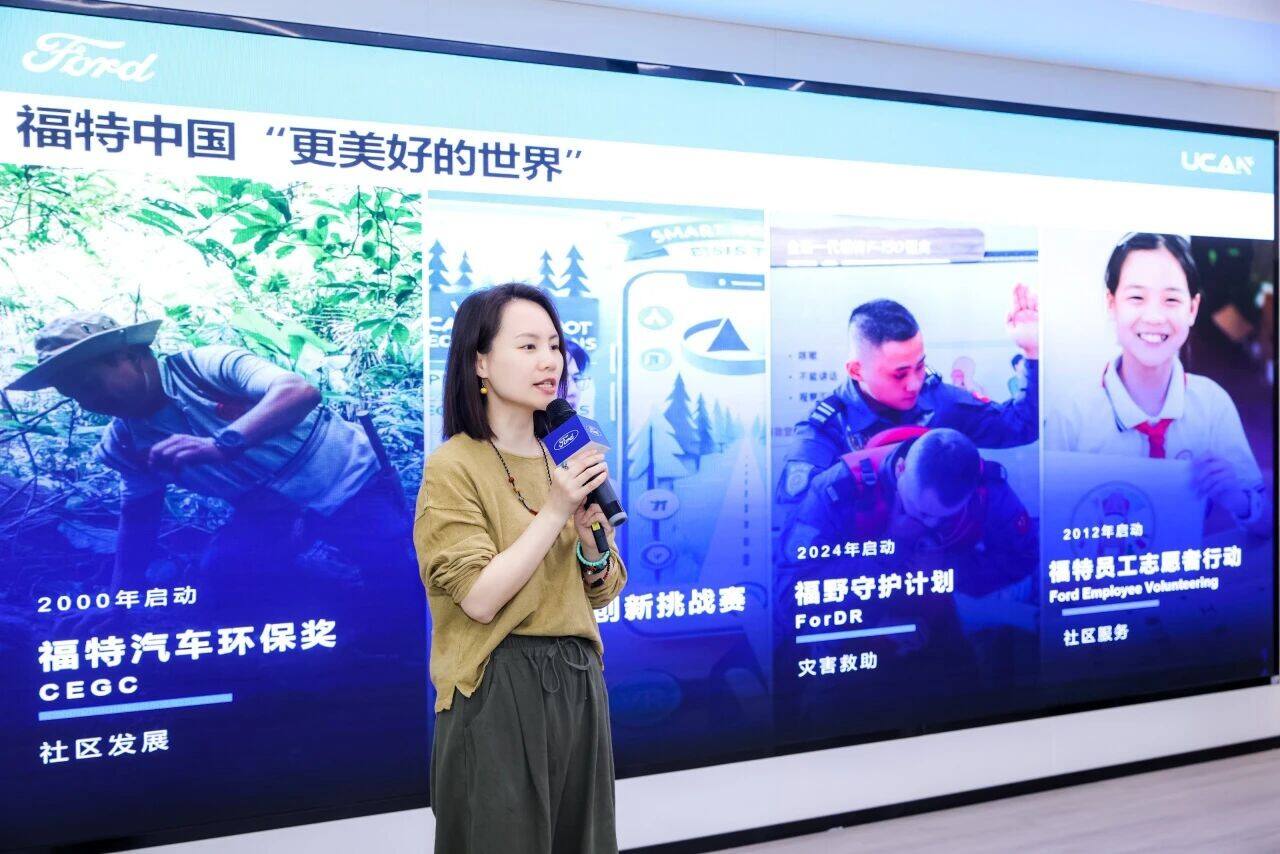
Ford’s corporate social responsibility (CSR) journey in China spans over two decades. It began in 2000 with the launch of the Ford Conservation & Environmental Grants. For more than 20 years, this program has actively addressed critical challenges and urgent needs within grassroots environmental movements. Today, it stands as China’s largest, longest-running, and most impactful corporate-led, independently operated environmental grant program, having supported the greatest number of environmental NGOs in the country.

Later, focusing on mobility, the Ford Youth Innovation Challenge (UCAN) turned its spotlight toward young talent. Between 2018 and 2025, nearly 10,000 young innovators from over 700 universities worldwide participated in this competition, gaining hands-on experience and boosting their career competitiveness.

Click to Enlarge

Yet, for Tina Zhang, Head of CSR at Ford China, who has personally overseen these initiatives for more than a decade, there was a lingering desire to do something different. "As impactful as those programs are," Tina reflects, "they still felt a bit removed from our core automotive business and our actual vehicle owners."

"I wanted to create a project that leverages Ford’s product strengths, deeply connects our owners and dealers, and delivers tangible value to everyone involved."

The logic was simple: Ford vehicles possess exceptional off-road capabilities and are a common sight at disaster relief scenes. Ford owners are inherently passionate, always ready to lend a helping hand when others are in need. However, passion alone is not enough; what they often lack are the specialized, practical skills required to rescue safely and effectively.

Thus, the "ForDR" (Ford Wilderness Guardian Program) was born.

The English name ForDR carries a clever double meaning: it stands for both "Ford Relief" and "for Disaster Relief."

"Our hope is that wherever there is a Ford owner, there is an extra layer of safety and reassurance," says Tina.

play icon

Understanding "ForDR"

Launched in 2024, ForDR is a signature public welfare project initiated by Ford China.

The Chinese name of the program, Fu Ye Shou Hu (meaning "Ford Wilderness Guardian"), carries a dual mission: "Guard" (Shou) focuses on preparedness, equipping individuals with the skills to handle emergencies before disaster strikes; "Protect" (Hu) focuses on action, providing funding and support to professional rescue organizations when disasters occur. Together, these two pillars form the complete logic of the project.

The ecosystem of ForDR consists of three core components:

  • The Owners: The primary beneficiaries, who receive training to gain practical self-rescue and mutual-aid skills.
  • The Dealers: The vital link connecting Ford with its customers, responsible for organizing and hosting the events.
  • Grassroots Rescue Teams: Professional partners who provide certified instructors to conduct training directly at local dealerships.

The foundational curriculum covers emergency first aid (including CPR, AED operation, bleeding control, and airway obstruction management), regional disaster response, and vehicle-based recovery and rescue skills.

For owners who have mastered the basics, the program offers advanced training. This includes certification courses to help them obtain professional rescue credentials, as well as high-level training in specialized disciplines such as swiftwater, mountain, and rope rescue.

Beyond training, the "ForDR Public Welfare Rescue Stations" are being established at dealerships across the country. Participating dealer stores open their doors to local rescue teams, offering free rest areas and vehicle maintenance services, and standing ready to provide immediate logistical and vehicle support during disasters.

In the two years since its launch, the program has reached 18 cities, with plans to expand to over 30 cities in 2026.

Inside the World of Grassroots Rescue Teams

Through this project, Tina has come to know a group of people she previously knew very little about: China’s grassroots, non-governmental rescue teams.

These grassroots teams operate under different models, generally falling into two categories. The first is a highly professionalized, corporate-style model where members are hired full-time, equipped with advanced gear, and undergo systematic training. However, the operational costs are high, putting immense pressure on team leaders to secure continuous funding and sponsorships.

The second is a purely volunteer-based model where members have regular day jobs and participate out of sheer passion. While more loosely structured, their motivations are incredibly pure.

Most of these volunteers have ordinary day jobs—they are IT professionals, truck drivers, hospital staff, or corporate employees at Fortune 500 companies. Rescue is their second calling, sustained entirely by voluntary dedication and out-of-pocket expenses.

When asked why they do it, everyone has a different starting point. For many, their journey began with the devastating 2008 Wenchuan earthquake—a watershed year that marked the founding of many rescue teams and altered the course of their lives. Others joined after witnessing accidents close to home, wanting to make sure they had the skills to help when it mattered most. Once they experienced their first rescue, they were hooked.

The captain of the Blue Sky Motorized Rescue Team once told Tina: "Rescue is addictive." Tina says this single sentence completely transformed her understanding of this community.

"They aren't born heroes; they are ordinary people," Tina says. "But once they lend a hand and experience that profound, genuine sense of accomplishment, they can never stop."

Both operational models have their merits and their struggles, but they share one commonality: the heavy emotional toll of this work, which is rarely seen by outsiders.

Whether it is searching for an elderly person lost in the city, performing late-night crisis intervention, or searching through debris after a major disaster—most missions happen far from the camera's lens. One captain recalled spending hours trying to talk someone down from a crisis, only to fail in the end. He said that image is permanently etched in his mind; every time he closes his eyes, it’s there, and he struggles to move past it. Yet, he is still out on missions at dawn, still replying to messages in the group chat. He even studied psychology to try to process these experiences, but some scars never fully heal.

Every time Tina sees him, she always tells him: "You need to take a break."

These teams often lack stable resources and a sufficient pool of capable hands. This is precisely where ForDR steps in—not just by training owners, but by funneling a steady stream of capable volunteers to these rescue organizations.

"If there's something in life you're going to get addicted to, I'd rather it be something like saving lives."

In managing the ForDR program, Tina and her team discovered that many rescue team members across China were already Ford owners. Rugged vehicles like the Ford F-150 Raptor, Bronco, and Ranger are highly practical in demanding rescue scenarios. Rescue captains openly admit that Ford owners—known for being down-to-earth and passionate—are their ideal recruits. The program's training gives these enthusiastic owners the confidence to take action, while building a reliable reserve of capable hands for local rescue teams.

Today, the ForDR Alliance WeChat group brings together trained owners, dealer partners, and rescue team members. The chat is active daily—sharing emergency rescue updates, discussing technical knowledge, or posting photos and quick updates in the middle of the night.

Click to Enlarge

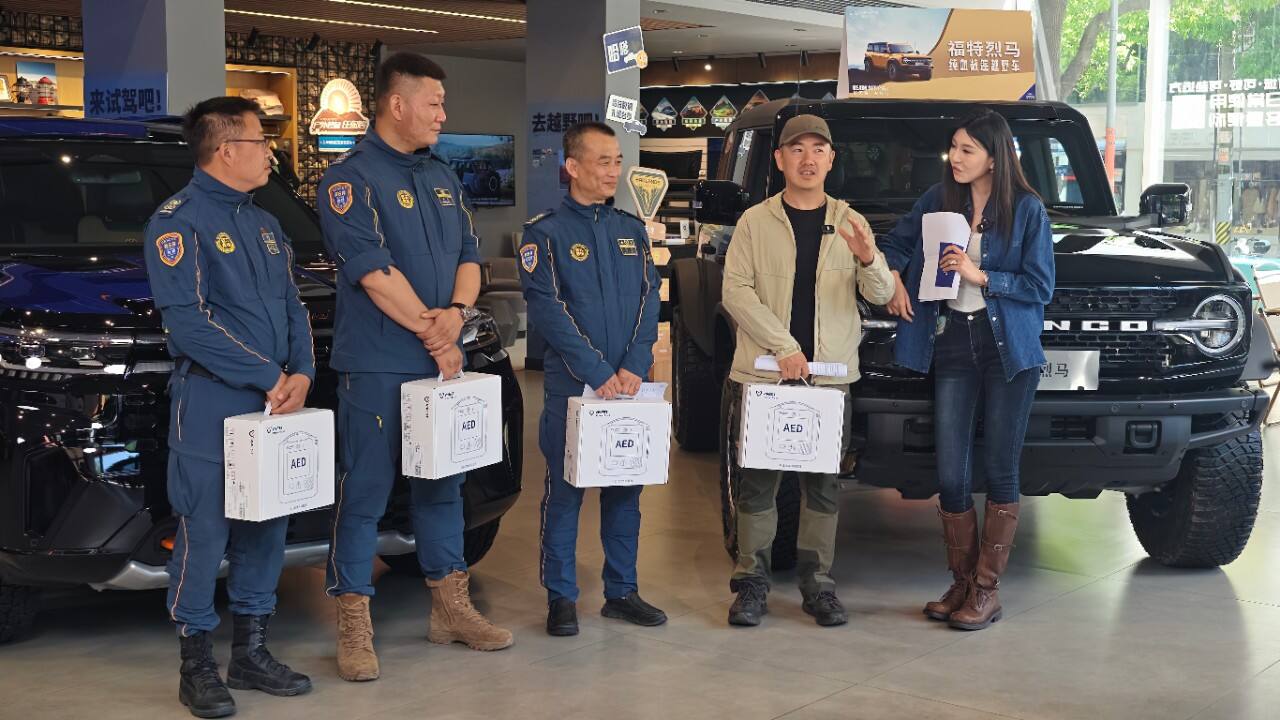
In May: The program donated AED devices to several rescue teams. Just two days after receiving the equipment, a team captain messaged the group: "We're heading out on a mission, and the AED is already in the truck." It is this instant, real-world feedback that makes Tina realize the program is truly making a difference, far beyond being just a plan on a PowerPoint slide.

Recently, as heavy torrential rains and floods hit several regions in southern China, the "Protect" aspect of the program was put to the ultimate test in real-time disaster relief.

In Shimen, Hunan: ForDR partnered with the Lianxin Rescue Collaboration Platform to set up the "ForDR Love Kitchen." They set up stoves, transported fresh ingredients, and prepared over 7,000 hot meals, delivering them directly to frontline rescue workers and displaced local residents.

In Guizhou: Hundreds of kilometers away, the Shuguang Rescue Team deployed six rescue vehicles—including the Ford Ranger—to navigate deep into severely affected areas like Changping, Panjiang, and Yanxia. There, they worked tirelessly to conduct rescues and clear mud and debris.

Having traveled with the project to more than twenty cities, Tina attends and listens closely to every training session. She admits that she occasionally wonders if she would have the courage to step forward if she saw someone collapse on the street.

"I know for sure," she says, "I feel much more confident now than I did before taking the training."

Tina hopes that through this project, more people will come to appreciate the incredible work of China’s grassroots rescue teams, and that more Ford owners will join their ranks after completing their training.

"Even if we only save one life," she says, "it is all worth it."